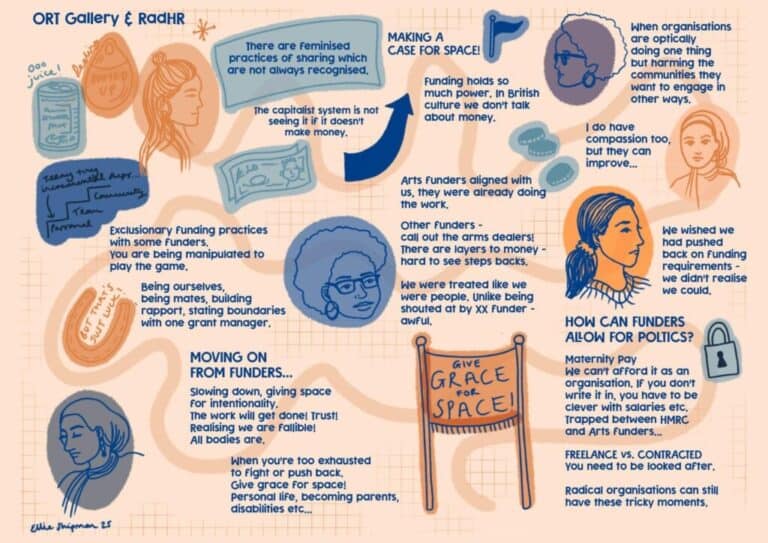
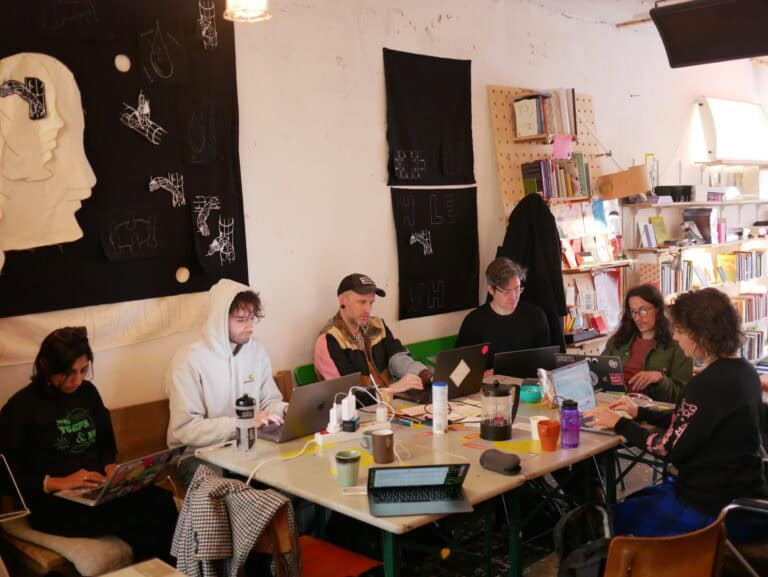
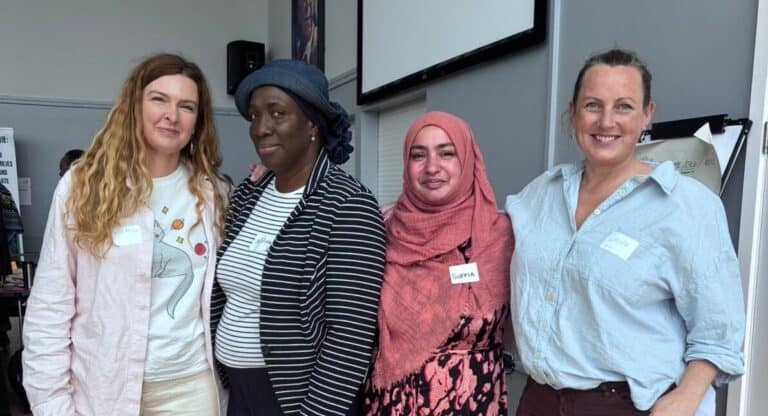
The Better Org (TBO) is an organisational development and learning consultancy partnering with social justice organisations and ecosystems to build liberatory, resilient, and justice-driven organisations and cultures. Through peer-to-peer exploration and emergence, systems-level thinking and innovation, community and movement building, and thought leadership, we support the reimagining of organisations as sites of care, courage, and collective transformation.
At TBO, as part of our practice and our work with organisations, we routinely explore power dynamics, how they emerge in organisations, how they move through the organisational system, how they can look different in different organisational spaces, and how they can be used to catalyse or disrupt change and transformation.
One key reflection that often shows up in our work is the importance of being able to name power, where it lies, who holds it, how it is used, where it allows for ease and where it causes discomfort. This is particularly key when organisations are creating and maintaining change and transformation infrastructures, and/or where organisations are creating spaces of collective learning or emergence.
What does power look like in our organisations?
An understanding of how power shows up in an organisation is key to understanding just how healthy (or not) the organisation’s system is. When we talk about power at TBO, we are talking about the ability of individuals or groups to influence outcomes and influence the position/thoughts of others. How power is held can influence access, voice and visibility; it can also determine how individuals in an organisation (and their contributions to the organisation) are valued.
Some people in an organisation will hold relatively high power (high ability to influence), while others will have relatively less (low ability to influence). People’s relative power can be informed by:
- roles & responsibilities, e.g. a person in a leadership role holding more power than a person in an administrator role,
- location, e.g. a person based in HQ, holding more proximate power than someone based in a regional office,
- language e.g. for organisations located and operating in English-speaking geographies, staff who have English as their primary language may be perceived as having more influence than those for whom English is a second or third language,
- working type, e.g. full-time or part-time, remote working or in-person working, may also impact how visible staff are, and therefore how much influence they may have in decision-making,
- specific teams or functions may hold different levels of power – e.g. in some organisations there is a distinction between client-facing/’front of house’ roles, and support or ‘back of house’ roles,
- cultural and social capital may also play a role in how power is situated, with members of the team who are ‘popular’, ‘likeable’ or who hold organisational knowledge, having higher power in certain circumstances than others, and
- broader societal dynamics and demographics (including race, ethnicity, sexuality, gender, class, age, physical/mental ability) can also play a significant role in determining what power is attributed to or taken from individuals in an organisational space.
We also see that power can come from particular spaces and processes in organisations. These can be:
- formal – supported and upheld by the organisational infrastructure and practice (for example, leadership team meetings or board meetings) or
- informal – existing beyond organisational infrastructure and practice (for example, a book club established by and managed by colleagues), and
- visible – spaces and processes clearly signed as mechanisms that support knowledge sharing and decision making (for example, new starter induction processes, HR policies, training sessions) or
- invisible – spaces and processes that are not as obvious or accessible (for example, informal mentorship and buddy relationships, ‘watercooler conversations’).
If we take a moment to consider the variety of factors that inform power in an organisation, then we understand that whilst each of us may hold or have access to power, the extent to which we hold and can access that power will be different depending on where we sit in the organisation, and how we are seen by our colleagues. This also means that the ways in which we are able to influence change and transformation via developing and implementing HR policies and processes will also be different.
Navigating through spaces of power difference to effect change and transformation
Many times, ideas for change and transformation can emerge from those with lived experience and/or direct need, or in spaces occupied by those with lower power, organisationally. The tension this presents is that when we develop organisational policies it is very rarely this group that takes the lead in the process, but often this group that can experience the inequitable impacts of these policies. This can leave them feeling disheartened, power-less, and unsure of how to impact organisational change and transformation processes in a meaningful way.
If you are trying to effect change and transformation in your organisation, but do not feel you have the power to have an impact on internal policies and processes, here are some approaches we have seen through our work that have helped create more opportunities for influencing the ways organisations operate. These approaches require a willingness to undertake personal introspection, a holistic understanding of how things are done in your organisation, a collaborative spirit, an innovative and learning-centred lens, and a commitment to long-term change.
1. Understand what power you hold and what influence you may already have
We all have the ability to influence change in our organisations. You may not occupy a traditionally high-power role, but your lived and learned experience, length of service, or location, may offer greater visibility and therefore a greater ability to influence others in the organisation. Think about how you can contribute your lived or learnt experience to identifying and developing HR policies that could support your organisation. For example, if you have particular experience of accessibility, is there a staff working group or employee engagement group that you can join and participate in? Could you offer to host/co-host a lunch and learn session for colleagues or to write a blog post on this topic? Could you help with ‘translating’ policies into practices that will be more accessible for colleagues?
2. Map your organisation – understand with whom and where power lies
Do you know where and how decisions are made in your organisation? Do you know where information is held and how it can be accessed/requested? Do you understand where and how to offer opinions or ask questions about organisational strategies, processes, or initiatives? Understanding the different power routes in your organisation means that you have insight into the spaces (whether formal or informal, open or closed) that you may be able to enter into and influence. When considering how to influence policy development, this might mean taking time to understand the various meetings or forums where conversations around employee experience and HR policies are discussed, learning if there are particular templates and processes that are used for developing and submitting proposals to the relevant leadership bodies, being aware of the particular moments during the year when employee engagement is discussed for example via staff surveys, as well as learning who has responsibility for policy development: it’s helpful to remember that while this is usually members of the HR team, in many organisations, particularly smaller ones, developing HR policies can be a responsibility shared amongst different team members.
3. Know your allies and build your coalitions
Who are your power-full partners? Are there colleagues who are in positions of power, or who wield influence across the organisation, that you can ally with to explore opportunities for transformation? Are there colleagues who can offer you access to decision-making spaces? Are there colleagues who can support you, for example, by advising on/reviewing ideas/proposals? Are there colleagues who can advocate for transformation and change in spaces that you may not have access to? Take time to identify colleagues who can support your transformation advocacy efforts, noting that influence isn’t just limited to role or hierarchical position – the most influential person in your organisation could be someone in a relatively junior role, who has proximity to decision-making people or spaces. Once you have mapped out these key people and pathways, then start to have conversations to share ideas about policies and practices that can support your organisation and identify ways in which you can collectively influence their development. Remember, change and transformation are a communal effort.
4. Use small steps to add to the evidence base for change and transformation
Changing the ways an organisation operates can feel overwhelming. Sometimes, your efforts may meet rejection, delay, interruption, or resistance. If you have ideas about changes and transformations that would benefit or support your organisation, consider whether there are opportunities to test out these changes within a more manageable and boundaried environment. For example, could you test out a new set of working principles, decision-making framework, or relational practice within a functional team, on a project, or within an employee group? Consider how you might share back learning from these tests and pilots – if you have a Monitoring, Evaluation and Learning (MEL) function in your organisation, could you engage them to provide methods for gathering and sharing learning across the organisation? If available, you can also offer up examples of different policies and practices that other organisations have undertaken, some of which have been graciously shared here on RadHR.
5. Adopt a holistic and long-term approach; understand what you can do and what others can take forward
Transformation requires consistent momentum and long-term support. This could mean that whilst we may be able to catalyse a transformation process, like an athletics relay team, we may need to hand the baton over to colleagues to take the process forward. We know that change is a communal effort – so take a moment to consider what you can have the most impact upon (i.e. what sits within your spheres of control and influence) and what is best situated with other colleagues to take forward. For example, you may have particular subject knowledge or experience about wellbeing practices and so may be best placed to introduce this as a topic of interest and discussion and to test different approaches, but another colleague may be better positioned to transform this knowledge into a workable wellbeing policy for your organisation. There may also be policies that were developed earlier on in the organisation’s history, that you or other colleagues are now able to develop a new version of that reflects new knowledge and insights.
Individual and collective power are important ingredients for organisational change and transformation
At TBO, we believe that organisations are spaces that benefit from the insights and perspectives that we each bring, as well as our individual and collective efforts that can catalyse ideas and bring them to fruition. The more our organisations can be sensitive to the variety of experiences that we hold, the more we can all collectively contribute to the creation of the organisational infrastructure, including systems and policies, that can support all of us.
We don’t all have direct responsibility for creating policies and practices, nor can we all be high power holders in our organisations; but we do each have power to effect the conditions for change, and we all (individually and collectively) have a duty to use what power we hold to transform our organisations into spaces of care, courage, and collective liberation.
Tina Ajuonoma
tina@thebetterorg.co.uk
Website: thebetterorg.co.uk
Email: hello@thebetterorg.co.uk
LinkedIn: uk.linkedin.com/company/the-better-org