When we’re working for social change, how we’re living our values internally—and the conditions needed to make that possible—often falls down our priority list. Even more sidelined is the importance of open-ended conversation and the power that shared reflection can offer us in reducing isolation and depletion.
This is important post-pandemic, as many of us are now working remotely, carrying both benefits (widening accessibility and inclusion in our organisations) as well as challenges (creating open spaces to come together).
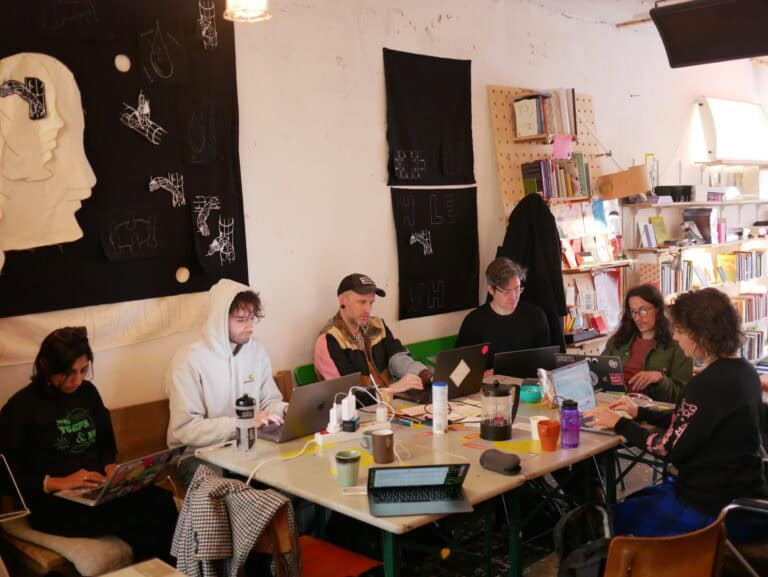
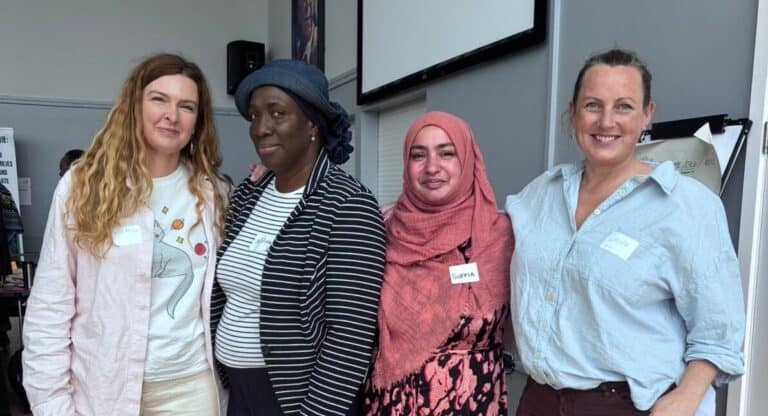
With this in mind, back in 2025, workers from Ort Gallery and RadHR met at the MIAH Islamic Arts Gallery in Birmingham to spend a half-day in conversation with one another about what was on our minds.
We didn’t have an agenda or intended outcomes for the session: rather, we went in with open minds and hearts to share the current challenges in our work, the issues we’re grappling with around shifting internal ways of working, and what our hopes were for the future of radical and care-centred policymaking efforts.
Our conversation spanned topics including:
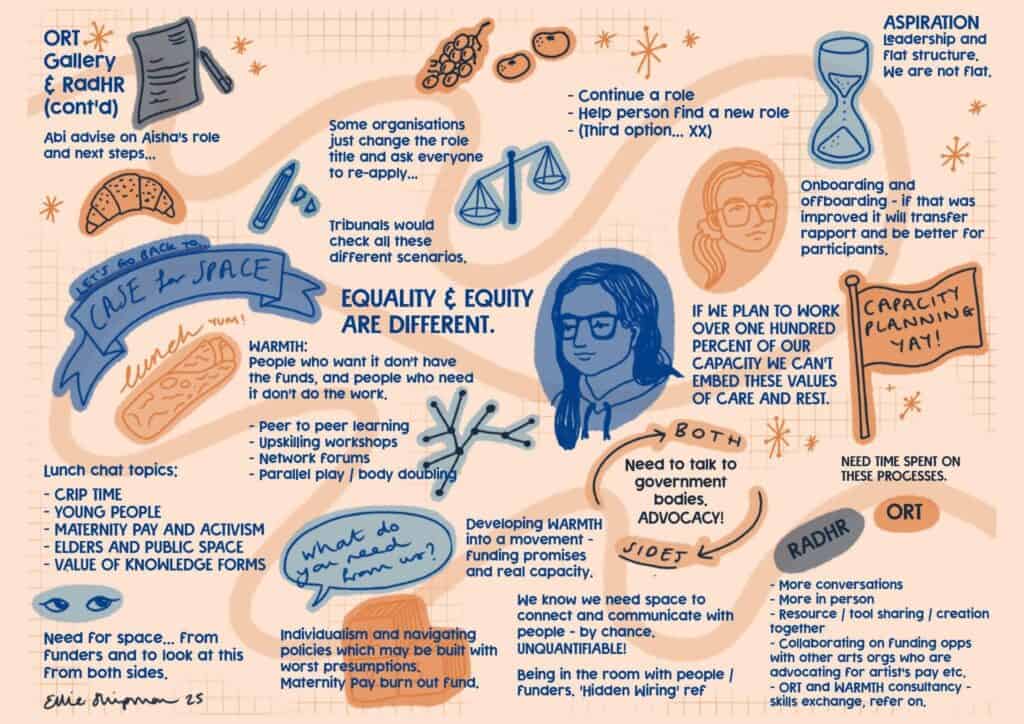
- The balance between ‘equity’ vs ‘equality’, and the importance of ensuring people feel equally supported while also recognising the additional challenges and barriers some workers face;
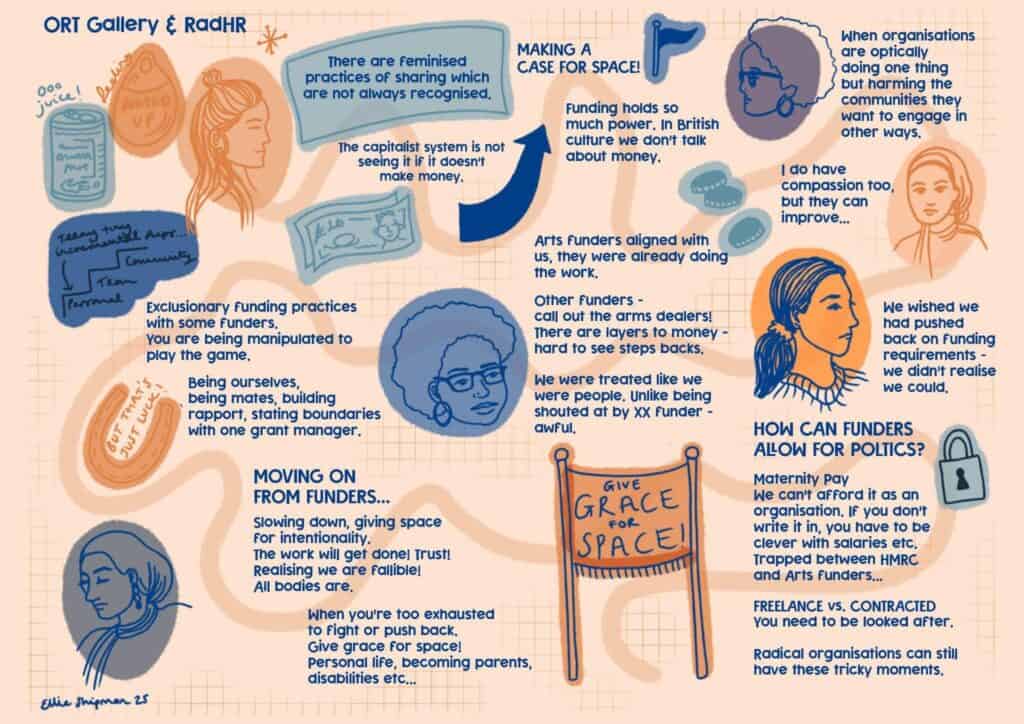
- How access to funding, flexibility from funders, and confidence in funder conversations shapes what kind of work groups can do on their internal stuff, and the level of enhancement groups can actually offer in their policies;
- How we can advocate for policies that feel radical to us, even if they are not considered radical more widely (such as fixed-term contracts which allow for role cycling between different people);
- The importance of capacity-planning in embedding a culture of spaciousness and rest (and how often this gets overlooked in our organisations).
The result was that we came away feeling lighter, more connected, and reassured that we were not alone in grappling with some of these issues. We also had the pleasure of working with Ellie Shipman, a Bristol-based artist, who took sketchnotes during our session and created a piece of artwork that captures the wide-ranging and meandering nature of our conversations that Winter morning. Thank you Ellie!
RadHR has tried to avoid being the ‘experts’ on radical policymaking. Instead, we want to facilitate space for groups to have these conversations and build connections so that we can all feel less alone in this work, and share knowledge and resources between us in ways that are transparent and collaborative.
We recognise that coming together for a session like this isn’t possible for every group—we were buoyed by core funding, which gave us the flexibility to pay for travel, space, and time with Ellie to hold our discussion—but we are also keen to keep thinking about how these conversations can happen or are already happening in other ways.
We would love to hear from other groups about their experiences of collective reflection, collaboration, and whether you’ve found ways of building in ‘open-ended time’ in your groups or with external partners to support learning and resilience. Share your reflections and let’s figure out ways to do more of this coming together, as a community!
We’d also like to express a deep and heartfelt thanks to Ort Gallery for spending the day with us and for coordinating access to such a fantastic event space–Ort Gallery is also the creators of Warmth–their pioneering methodology for equitable working methods in arts organisations.
You can share your reflections with us via our email: hello@radhr.org
Postface from Josie at Warmth:
The above article, written by Veronica from RadHR, looks back at a workshop we hosted in January 2025. Warmth has changed since then, we set up a membership that within a few weeks became 45 freelancers and organisations strong, we developed our third Warmth report and two workbooks for organisations and artists to support their journey in making the arts a more equitable sector. Last week we incorporated Warmth as its own CIC, separate from Ort Gallery and with its own dedicated board of directors. We are excited to embark on this new chapter.
At a time when so much of the news around us is filled with sadness and despair, we are reminded why Warmth is needed. Employers play a huge role in shaping how our society works. Work can be a place of belonging, dignity and care, but too often it reproduces the inequalities and exclusions we see elsewhere. We believe we can do better, we must do better, especially for our Black and autistic communities. Join us on this journey!
You can find out more about Warmth here: Warmth — ORT gallery