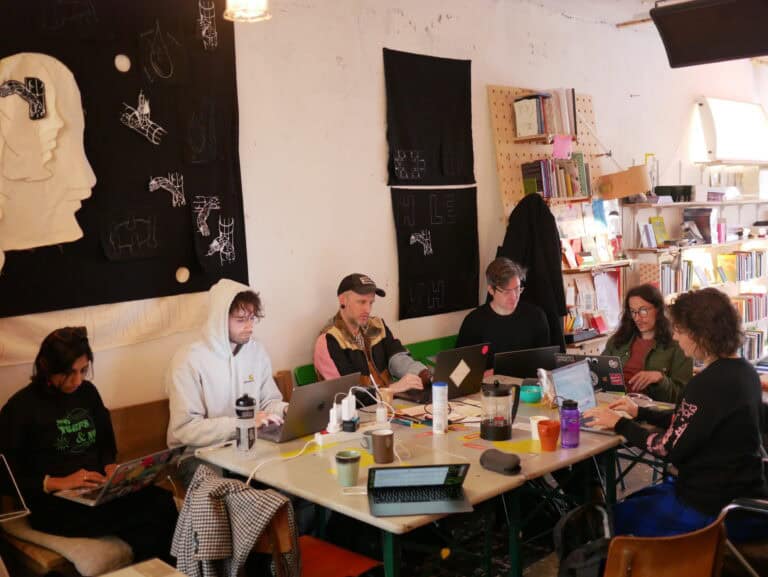
I’m lugging a large yellow shopping bag around Central London, breathing slightly-uncomfortably through an FFP2 ventilator and fielding the slightly-odd glances of strangers, as possibly the only person on Oxford Street with a mask on. The bag has a HEPA air filter, more masks, and two boxes of COVID tests. I almost convinced myself to leave it at home, rather than carry it on the train from Bristol this morning.
‘It’s only a small event I’m facilitating,’ I said to myself, looking at the giant bag of kit. ‘I’ve tested and know what I’ve got is a sinus infection well-beyond the contagious stage,’ I rationalised, through the slight muffling of the mask. ‘It’s not like this is a fully public event we’re running,’ I told myself, feeling the extra weight of the carrier bag.
Underneath these rationalisations, I felt uncomfortable and inconvenienced. And underneath those feelings, I felt anxious. I felt anxious about everything that I’d come to associate with masks and tests and air filters; the devastating isolation of lockdowns, the paralysing uncertainty of knowing what was and wasn’t safe to do, the deep visceral worries of what could happen to me, or my friends and family if we got ill… not to mention the realities of those who were already ill and got more seriously ill during that initial wave of the pandemic.
So much is tied up in this awkward and inconvenient bag of kit. It is also a practical manifestation of the events policy we’ve recently signed off, which reminds me that not lugging this bag around would perpetuate a kind of exclusion at our public events that didn’t feel ok to us, as a team.
But that hasn’t made the feelings go away. A couple other things have helped, though.
The first of these is the courage of the disabled activists who have continued to share their stories and their needs around COVID-safety, since the government told us that the pandemic was over. Sometimes these have felt easier to take in, other times more difficult. But they have continued to paint a picture of activist, community and social justice spaces that have inadvertently turned our collective backs on many, and contributed to the mass-disabling event that is Long Covid and the impacts of an ongoing pandemic. (If that feels hard to read, I both fully appreciate those feelings, and still ask you to stick with me here).
The second thing that has helped with the feelings has been our team conversations about them. Between the three of us, we’d all experienced periods of lockdown which had impacted us more or less heavily. We had varied first- or second-hand experiences of disability and mental health breakdowns during that time, and thus had a strong conceptual understanding of the issues at play. But we also had some of our own reactions to aspects of the lockdown measures that were imposed – and the things that reminded us of them.
In the process of creating our events policy, we spent multiple meetings sitting with some of the perspectives coming from disability justice spaces before writing anything down. We made space to air our own reactions to these perspectives and to reintroducing things like masking and testing, and tried to tease apart where those reactions were coming from and what they might be telling us. Slowly and gently, we have worked through what we might need to do to run events that are aligned with the disability justice framings we believe in.
And the feelings I described are still there – even if the volume on them has turned down a notch or two. Each time I go into an event with a mask on, I feel the need to justify myself; each time I ask participants to test before they attend, I feel like I am making an unreasonable request; each time I lug that bloody bag across the country on an overbooked train, part of me wonders why I bother. But each time I do each of these things, they become a bit more normal again. As they should.
These feelings are part of so many policies, whether or not we have the space to talk about them openly. When people tell me they find policies boring or bureaucratic, it makes me think of all the unsettling emotions most organisational policies are designed to hide. Policy-making can be stressful, complex, creative and even liberating – when it is boring, it’s usually because it is systematically avoiding the complex questions that make working together in caring and equitable ways so hard.
There are lots of other policy areas that also seem deeply primed to bring out similar nervous system reactions in us. I’ve seen it most acutely in discussions of pay (who doesn’t have some level of money trauma???), conflict (when it goes wrong, it goes really wrong!) and what it might mean to fire someone (we’re not those kinds of bosses, are we???). Oftentimes I see groups avoid these policy areas like the plague. If they can’t be ignored, they usually get reduced to their most basic bureaucratic elements, or become sources of open conflict or lingering tension. None of which change us for the better.
We’ve certainly not found any magic bullets for these pitfalls via our own policy-making experiences. What we have carved out is more time and space to notice our own nervous system responses to different ways of doing particular policies, explore those responses together, and eventually start to write things down. So while lugging the big yellow carrier bag around Central London is never going to stop being awkward or inconvenient, we’ve spent enough time together understanding why those feelings are there, to avoid them getting in the way of questions that are far more fundamental to practising the values we want to see more of in the world. And I’m sure we’ll still need regular reminders of that along the way!
If you’d like to explore more perspectives around the ongoing impacts of groups’ engagement/non-engagement with COVID-related safety, there are a range of powerful perspectives and resource links in this forum post.